Bootstrapping Your Business: Grow Without External Funding
Bootstrapping Your Business: Grow Without External Funding
Bootstrapping Your Business: Grow Without External Funding
Bootstrapping Your Business: Grow Without External Funding
Bootstrapping Your Business: Grow Without External Funding
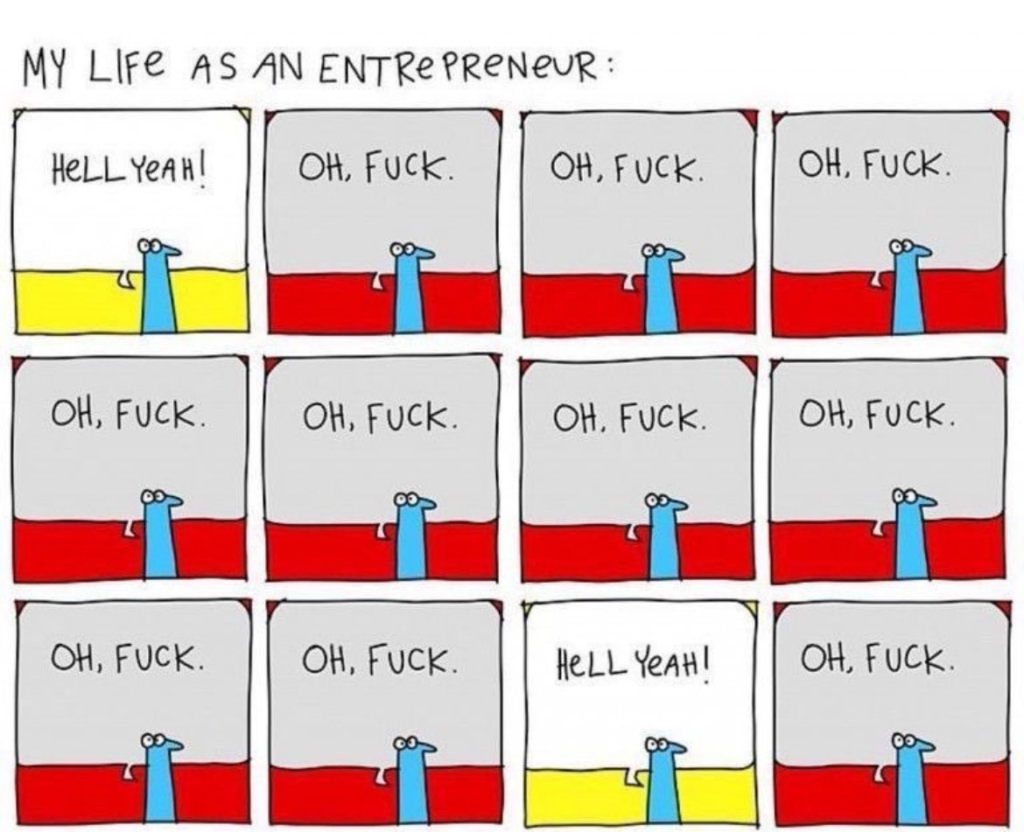
You’ve got a brilliant business idea that could change your industry. Friends encourage you to pitch investors. Business magazines glorify startup founders who raised millions. Meanwhile, you’re wondering if building a real business requires begging strangers for money you’ll spend years repaying with interest and equity.
Nigerian entrepreneurs face constant pressure to seek external funding, as if bootstrapping somehow represents failure or lack of ambition. Investment platforms promise quick capital while glossing over the control you surrender, the pressure to scale prematurely, and the reality that most funded startups still fail despite the capital injection.
Understanding how to grow your business without external funding opens pathways to sustainable growth, complete ownership, strategic flexibility, and businesses built on actual customer revenue rather than investor expectations. Thousands of successful Nigerian businesses grew from nothing to substantial enterprises without ever pitching a single investor.
Is It Possible to Start Your Own Business Without Investors
Is it possible to start your own business without investors? Absolutely. In fact, most successful businesses worldwide started exactly this way – founders using personal savings, reinvested profits, and creative resourcefulness to build sustainable enterprises.
The bootstrapped approach forces financial discipline from day one. When every naira comes from your pocket or customer payments, wasteful spending becomes impossible. You learn to distinguish between nice-to-have luxuries and absolute necessities that drive revenue.
Bootstrapping builds businesses on real market validation rather than investor belief. If customers won’t pay for your product or service, you discover this immediately and can pivot quickly. Funded startups sometimes burn millions before realizing their product doesn’t solve real problems customers will pay to fix.
Nigerian success stories prove bootstrapping works brilliantly in our market. Companies like Andela, Flutterwave, and Paystack all started with minimal capital before attracting investment after proving their business models worked. They bootstrapped until traction justified scaling capital, not the reverse.
The question isn’t whether starting without investors is possible – it’s whether you have the discipline, creativity, and patience to build sustainably rather than chasing the lottery ticket of venture capital that statistically almost never comes.
What Is Bootstrapping and How Does It Work
Bootstrapping means building and growing your business using personal finances, revenue from operations, and strategic reinvestment rather than external funding from investors, banks, or venture capital.
The term comes from the phrase “pulling yourself up by your bootstraps” – succeeding through your own efforts without outside help. In business context, bootstrapping represents self-funded growth where customer revenue drives expansion rather than investor capital.
How does bootstrapping work in business practically? Founders start with minimal capital, often personal savings or small amounts borrowed from family. They launch quickly with minimum viable products, validate market demand, generate initial revenue, reinvest profits back into growth, and scale gradually as revenue permits.
Bootstrapped businesses prioritize profitability over growth speed. While funded startups often lose money for years while “acquiring users” or “building market share,” bootstrapped companies must generate more revenue than they spend from early stages to survive.
This approach creates businesses with stronger fundamentals. You understand unit economics intimately because you can’t afford losses. You know which marketing channels actually convert because wasteful spending threatens survival. You build efficient operations because bloated overhead consumes precious capital.
Bootstrapping doesn’t mean staying small forever. Many bootstrapped businesses eventually reach points where strategic investment makes sense for expansion into new markets, major product development, or acquisition opportunities. However, they negotiate from positions of strength with proven business models rather than desperation for survival capital.
Real Examples of Nigerian Bootstrapped Success
What is an example of bootstrapping a business that actually worked in Nigeria? Numerous inspiring stories demonstrate that self-funded growth creates lasting success.
Jumia started with relatively modest capital before raising funds, proving their marketplace concept through bootstrapped operations before scaling with investment. The founders validated demand, built operational systems, and demonstrated traction before seeking external capital.
Many Nigerian e-commerce businesses like Payporte began operations with founders’ savings, focusing intensely on customer acquisition and retention without venture backing. They grew sustainably by reinvesting profits rather than burning through investor funds.
Professional service businesses across Nigeria – accounting firms, consulting companies, marketing agencies – almost universally bootstrap. They start with one or two founders offering services, gradually hiring as client revenue permits, and expanding capabilities as profits accumulate.
Manufacturing businesses frequently bootstrap due to investor hesitation about capital-intensive operations. A Lagos-based furniture manufacturer might start with basic tools in a small workshop, deliver quality products, reinvest profits into better equipment, and eventually build substantial manufacturing capacity entirely from operational cash flow.
Technology companies can bootstrap particularly effectively with low initial capital requirements. Software developers build products using free or low-cost tools, validate with early customers, and scale gradually as subscription revenue grows predictably.
These examples share common patterns: starting small, focusing intensely on customers, maintaining lean operations, reinvesting profits strategically, and scaling based on proven demand rather than projected hockey-stick growth charts.
Comparing Bootstrapping and Raising Funds
What is the difference between bootstrapping and raising funds? Understanding the trade-offs helps you choose the approach that fits your business, personality, and goals.
Ownership and Control represent the most significant difference. Bootstrapped businesses remain 100% owned by founders who make all strategic decisions independently. Raising funds means surrendering equity ownership and often accepting investor influence or control over major business decisions.
Growth Speed varies dramatically between approaches. Funded businesses can scale rapidly using capital to accelerate marketing, hire teams, develop products, and expand geographically simultaneously. Bootstrapped businesses grow more gradually, limited by operational cash flow and profit reinvestment capacity.
Financial Pressure differs fundamentally. Bootstrapped founders answer only to customers and themselves, allowing patient strategy focused on sustainable profitability. Funded founders face investor expectations for rapid growth, often sacrificing profitability for user acquisition or market share, creating constant pressure to meet projections.
Risk Distribution changes with funding. Bootstrapped founders risk their own money and opportunity cost but maintain complete control over their destiny. Funded founders share financial risk with investors but face different pressures including potential replacement if investors lose confidence.
Exit Expectations shift dramatically. Bootstrapped businesses can remain profitable lifestyle companies forever if founders choose, providing comfortable income indefinitely. Funded businesses typically require exits through acquisition or IPO to generate investor returns, sometimes forcing founders to sell businesses they’d prefer keeping.
Neither approach is inherently superior – the right choice depends on your business model, personal goals, and specific circumstances. Capital-intensive businesses or those requiring rapid scaling to capture network effects might need funding. Service businesses, local operations, or companies with clear paths to profitability often thrive through bootstrapping.
Strategic Steps for Building a Startup Without Funding
How to build a startup without funding requires deliberate strategy, financial discipline, and creative problem-solving that funded competitors can avoid through capital deployment.
Start With Minimum Viable Product (MVP)
Launch the simplest version of your product or service that delivers core value. Nigerian customers value solutions to real problems over polished interfaces. A web designer might start offering basic website packages before building a full-service digital agency. MVP approach gets you to market quickly with minimal capital, allowing real customer feedback to guide development.
Focus Intensely on Early Revenue
Bootstrapped businesses cannot afford extended periods without income. Offer services before products since services require minimal upfront investment. Provide done-for-you solutions before building scalable offerings. Personal delivery with high margins beats automated delivery with thin margins when cash is tight.
Keep Overhead Ruthlessly Low
Every unnecessary expense drains precious capital that could fund growth. Work from home or co-working spaces instead of expensive offices. Use free or low-cost software tools before enterprise solutions. Nigerian entrepreneurs enjoy advantages here – lower operating costs mean bootstrapped capital stretches further when managed carefully.
Reinvest Profits Strategically
Treat early profits as growth capital, not personal income. Prioritize investments that directly generate additional revenue: marketing that brings customers, equipment that increases capacity, systems that enable scaling. Avoid vanity investments like fancy offices or expensive branding when basic alternatives deliver similar results.
Master Cash Flow Management
Understanding how to grow your business without external funding requires obsessive cash flow attention. Invoice promptly and follow up on payments persistently. Negotiate favorable payment terms with suppliers while encouraging quick payment from customers. Poor cash flow management kills more bootstrapped businesses than lack of opportunity.
Advantages of Bootstrapping Your Nigerian Business
Why choose bootstrapping when funding seems to offer faster paths to success? Self-funded growth provides distinct advantages particularly valuable in Nigeria’s business environment.
Complete Decision-Making Freedom
You maintain 100% control over strategy, operations, culture, and direction. No investor meetings, no board approvals, no pressure to pursue growth strategies you disagree with.
This freedom proves invaluable when navigating Nigeria’s complex business environment where local knowledge, relationships, and cultural understanding often matter more than textbook strategies that work in Western markets.
Customer-Focused Business Model
Bootstrapped businesses must satisfy customers since they provide the only revenue source. This creates natural alignment between business success and customer value.
Funded businesses sometimes prioritize investor satisfaction over customer satisfaction, building features investors find impressive rather than solving problems customers actually pay to fix.
Financial Discipline and Efficiency
Operating on limited capital forces excellent financial habits that create competitive advantages. You learn to generate maximum results from minimum investment, developing efficiency that funded competitors never cultivate.
These habits persist as businesses grow, creating sustainably profitable operations rather than perpetually money-losing ventures that survive only through continued funding rounds.
Faster Decision Making
Without investor approval requirements or board oversight, bootstrapped founders implement decisions immediately. This agility proves particularly valuable in Nigeria’s fast-changing market where rapid adaptation creates competitive advantages.
Lower Stress and Pressure
While bootstrapping certainly involves stress, it’s different from investor pressure. You control your timeline, define success on your terms, and aren’t forced to pursue unsustainable growth to satisfy external expectations.
Profitable businesses generating comfortable founder income represent success even if they never become unicorns or achieve venture-scale exits.
Challenges to Expect When Bootstrapping
Honesty about bootstrapping challenges helps you prepare rather than encountering unexpected difficulties that derail progress.
Slower Growth Trajectory
Bootstrapped businesses typically grow more slowly than funded competitors. If your market has strong network effects or winner-take-all dynamics, slower growth might mean missing your window.
However, most businesses don’t operate in these markets. Local service businesses, B2B companies, niche products, and many other business models succeed perfectly well with gradual growth.
Personal Financial Pressure
Using personal savings or forgoing salary during early stages creates financial stress. Many bootstrappers maintain day jobs while building businesses, working exhausting hours to serve both obligations.
This pressure particularly affects founders with family obligations, debt, or limited savings. Careful financial planning and realistic timelines help manage these pressures.
Limited Resources for Experimentation
Bootstrapped businesses cannot afford extensive trial-and-error testing. You must choose strategies more carefully, relying on research, experience, and judgment rather than testing multiple expensive approaches simultaneously.
This constraint actually forces strategic thinking that improves decision quality, but it does limit your ability to pursue multiple opportunities simultaneously.
Difficulty Attracting Top Talent
Competing for experienced talent against funded competitors offering high salaries and equity packages challenges bootstrapped businesses. You might need to hire less experienced team members, invest in training, or offer creative non-cash compensation.
Personal Sacrifice Requirements
Bootstrapping often requires founders to accept below-market compensation, work extreme hours, delay personal goals, and shoulder significant stress. Not everyone has circumstances allowing these sacrifices or personality suited to the journey.
How The SME Mall Supports Bootstrapped Business Growth
Building a startup without funding requires expertise across financial management, strategic planning, operational efficiency, and legal compliance while operating with limited resources and no margin for expensive mistakes.
Our Business Advisory services provide bootstrapped entrepreneurs with strategic planning support, financial modeling that optimizes limited capital deployment, market research identifying opportunities requiring minimal investment, and growth strategies designed specifically for self-funded businesses operating in Nigeria’s unique market conditions.
Our Accounting & Finance services help bootstrapped businesses implement robust financial management including cash flow optimization, profit maximization strategies, expense control systems, and financial planning that ensures capital efficiency while maintaining compliance with Nigerian regulations.
Build Your Business Your Way
Bootstrapping isn’t the easy path, but it might be the right path for your business, personality, and goals. Self-funded growth builds businesses on solid foundations of real customer value, efficient operations, and sustainable profitability rather than projected growth curves and investor enthusiasm.
The choice between bootstrapping and raising funds isn’t about which approach is objectively better – it’s about which approach aligns with your specific business model, personal circumstances, risk tolerance, and definition of success.
Thousands of Nigerian entrepreneurs are building substantial, profitable, sustainable businesses entirely through self-funding. They maintain complete ownership, operate with strategic freedom, serve customers intensely, and build wealth gradually through retained profits rather than exit events.
Your business can follow this path. Start small, focus intensely on customer value, manage finances carefully, reinvest profits strategically, and scale gradually based on proven demand.
Ready to build your business without surrendering ownership or control? Contact The SME Mall today for strategic guidance, financial management support, and comprehensive services designed specifically for bootstrapped entrepreneurs building sustainable Nigerian businesses on their own terms.
